
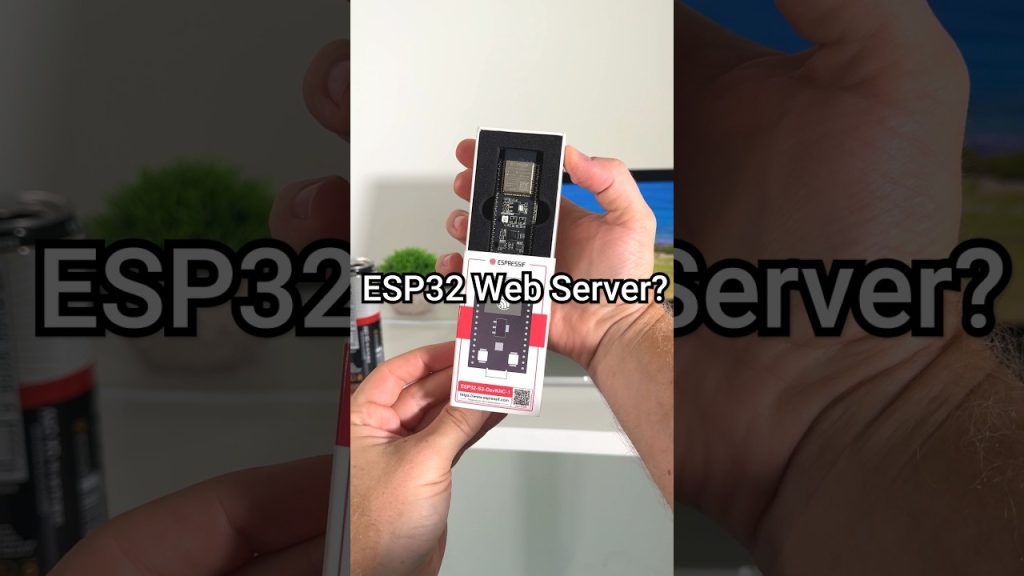
Can you actually turn an ESP32 into a public web server? Honestly, the answer is yes, absolutely! But is it really a *good* idea? That’s what I’m diving into today. We’re talking about using a tiny, low-power microcontroller to host a website accessible from anywhere. Sounds super cool, right? It is, but there’re catches. I’ll break down the pros and cons and compare it to traditional web hosting. So, let’s see whether using an ESP32 as a public web server is a viable option for your next project. We’ll explore the technical hurdles, the security implications, and the overall feasibility of this intriguing concept. Imagine hosting your personal blog or a simple data dashboard directly from a device that costs less than a cup of coffee – it’s a tantalizing thought!
What is an ESP32 Web Server?
Okay, so what exactly are we talking about here? An ESP32 is basically a small, inexpensive microcontroller with built-in Wi-Fi capabilities. You can program it to serve web pages, meaning it can respond to HTTP requests just like a regular web server. This opens up a ton of possibilities for IoT projects, home automation, and more. I’ve been tinkering with these for a few months, and honestly, they’re pretty neat. The ESP32’s appeal lies in its compact size, low power consumption, and integrated Wi-Fi and Bluetooth connectivity. It’s a system-on-a-chip (SoC) that packs a surprising amount of functionality into a small package.
Think of it like this: instead of your website living on a big server farm somewhere, it’s living on a tiny chip in your garage. Kinda wild, isn’t it? This little chip can handle basic HTTP requests, serve HTML, CSS, and JavaScript files, and even interact with sensors and actuators. For example, you could build a weather station that displays temperature and humidity data on a webpage hosted by your ESP32. Or, you could create a remote control system for your home appliances, accessible through a web interface.
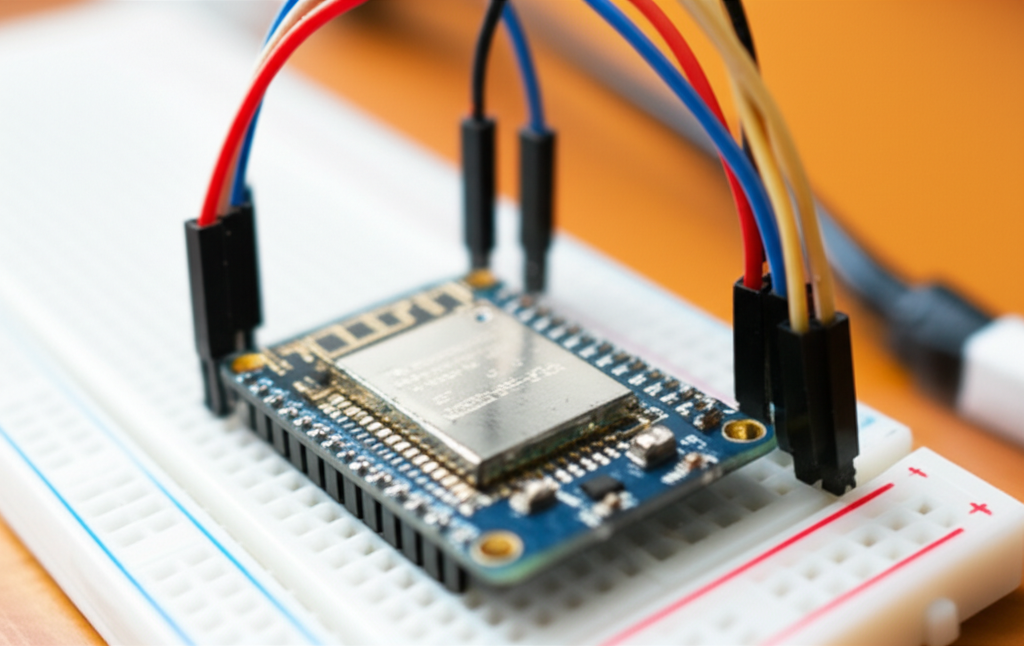
ESP32 vs. Traditional Web Hosting: Key Differences
Now, let’s get down to brass tacks. How does an ESP32 web server stack up against traditional web hosting? There’re big differences, folks. HUGE. Traditional web hosting involves renting space on a server owned by a hosting company. They handle all the server maintenance, security, and infrastructure. You just upload your files and go. These hosting providers typically offer a range of services, including shared hosting, VPS hosting, dedicated servers, and cloud hosting. They invest heavily in infrastructure, security, and support to ensure that your website is always available and performs well. Think of companies like GoDaddy, Bluehost, or AWS – they manage the complexities of running a web server so you don’t have to.
On the other hand, an ESP32 web server is all on you. You’re responsible for everything: the hardware, the software, the network, the security… everything. It’s a lot more work, but it also gives you a lot more control. I’ve managed my own servers before, and let me tell you, it’s not for the faint of heart. Setting up and maintaining a server involves tasks like configuring the operating system, installing web server software (e.g., Apache or Nginx), managing security updates, and monitoring server performance. With an ESP32, you’re essentially miniaturizing this entire process and running it on a microcontroller with limited resources.
Here’s a quick comparison table:
| Feature | ESP32 Web Server | Traditional Web Hosting |
|---|---|---|
| Cost | Low (initial hardware cost) | Recurring (monthly/yearly fees) |
| Maintenance | High (you manage everything) | Low (hosting provider manages) |
| Scalability | Limited | High |
| Security | Your responsibility | Shared responsibility (provider handles some) |
| Performance | Low | High |
Let’s look into a bit deeper into these differences. Cost-wise, while the ESP32 hardware is inexpensive, remember to factor in the cost of your time and effort to set it up and maintain it. Traditional hosting involves recurring fees, but these fees cover a significant amount of value in terms of infrastructure, support, and security. Scalability is another vital factor. If your website suddenly experiences a surge in traffic, a traditional hosting provider can easily scale up resources to handle the load. With an ESP32, you’re limited by the device’s processing power and memory, and scaling up is not a straightforward process. Security is perhaps the most critical difference. Hosting providers invest heavily in security measures to protect their servers from attacks. With an ESP32, you’re solely responsible for implementing security measures, which can be a daunting task if you’re not a security expert. I once forgot to update the firewall on my server, and within hours, it was compromised. It was a painful lesson in the importance of security best practices.
Pros and Cons of Using an ESP32 as a Web Server
Okay, let’s weigh the upsides and downsides. There are definitely some compelling reasons to consider using an ESP32 as a web server, but there’re also some serious limitations you need to be aware of.
Pros:
- Low Cost: The ESP32 itself is super cheap. You can pick one up for under $10. In some cases, you might even find them for as low as $5 during sales or promotions. This makes it an incredibly affordable option for hobbyists and developers on a tight budget.
- Customization: You have complete control over the hardware and software. You can tailor the ESP32’s functionality to your specific needs, without being constrained by the limitations of a traditional hosting platform. For example, you can integrate it with custom sensors, actuators, and other peripherals.
- IoT Integration: It’s perfect for projects that need to interact with sensors and other devices. The ESP32’s built-in Wi-Fi and Bluetooth connectivity make it ideal for connecting to a wide range of IoT devices. You can use it to collect data from sensors, control actuators, and create interactive IoT applications. I use one to monitor the temperature and humidity in my greenhouse, and it sends me alerts if the conditions deviate from the optimal range.
- Learning Experience: You’ll learn a ton about networking, embedded systems, and web development. Setting up an ESP32 web server requires you to examine into various aspects of computer science and engineering. You’ll learn about TCP/IP networking, HTTP protocols, web server configuration, embedded programming, and security best practices. It’s a fantastic way to expand your knowledge and skills in these areas.
Cons:
- Limited Resources: The ESP32 has limited processing power, memory, and storage. Compared to a traditional server, the ESP32’s resources are severely constrained. This limits the complexity of the websites and applications you can host on it. You’ll need to optimize your code and content to minimize resource usage. For example, you should avoid using large images or complex JavaScript libraries.
- Security Risks: You’re responsible for securing your server, and that can be tricky. As mentioned earlier, security is a major concern when running a web server on an ESP32. You’ll need to implement security measures such as strong passwords, firewalls, and intrusion detection systems to protect your server from attacks. It’s also key to keep your software up to date with the latest security patches. A vulnerability in your code or configuration could allow attackers to gain access to your server and compromise your data.
- Reliability: It’s not as reliable as a professionally managed web server. The ESP32 is not designed for continuous operation in a production environment. It’s more prone to crashes and errors than a traditional server. You’ll need to monitor your server regularly and implement measures to ensure its availability. For example, you could set up a watchdog timer to automatically reboot the ESP32 if it crashes.
- Scalability: It’s not easy to scale your website to handle more traffic. If your website becomes popular and starts attracting a lot of traffic, the ESP32 will quickly become overwhelmed. It’s not designed to handle high traffic loads. Scaling up an ESP32 web server is not a straightforward process. You would need to implement load balancing and clustering techniques, which can be complex and time-consuming.
Honestly, the limitations are pretty significant. But for certain niche applications, the pros can outweigh the cons. For example, if you’re building a small-scale IoT project that only needs to serve a few users, the ESP32 might be a viable option. However, if you’re planning to host a public website that will be accessed by a large number of users, you should definitely stick with traditional web hosting.
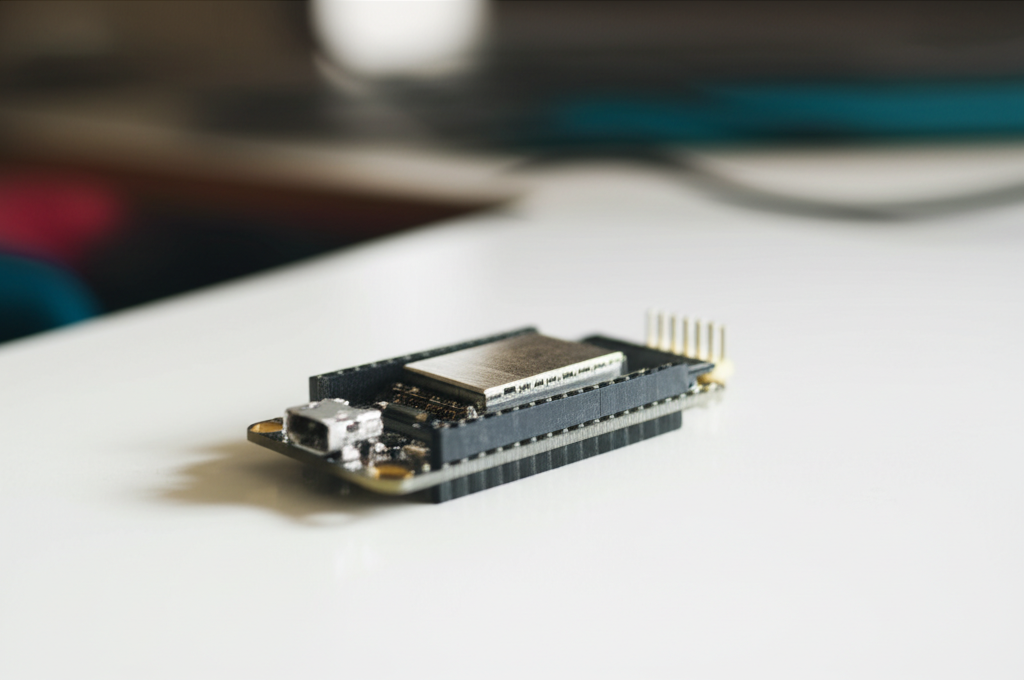
Use Cases: When Does an ESP32 Web Server Make Sense?
So, when would you actually want to use an ESP32 as a web server? Here’re a few scenarios where it might be a good fit:
- Home Automation: Controlling lights, thermostats, and other devices from a web interface. Imagine being able to turn on your lights, adjust your thermostat, and unlock your front door all from a web page hosted on your ESP32. This can be incredibly convenient and can also help you save energy. I’ve even seen someone build a system that automatically adjusts the blinds based on the position of the sun.
- Sensor Monitoring: Displaying data from sensors (temperature, humidity, etc.) on a website. My friend uses this to monitor his beehive! He has sensors that track the temperature, humidity, and weight of the hive, and he displays this data on a webpage hosted by an ESP32. This allows him to monitor the health of his bees remotely and take action if necessary. Another application is monitoring soil moisture in a garden and automatically triggering irrigation when needed.
- Small-Scale IoT Projects: Creating a simple web interface for interacting with your IoT devices. For example, you could build a smart coffee maker that allows you to schedule coffee brewing from a web page hosted on your ESP32. Or, you could create a remote control system for your garage door, accessible through a web interface. The possibilities are endless.
- Learning and Experimentation: Just messing around and learning about web servers and embedded systems. Building an ESP32 web server is a great way to learn about networking, embedded programming, and web development. You can experiment with different technologies and techniques without having to invest in expensive hardware or software. It’s a fun and rewarding way to expand your knowledge and skills.
Basically, if you need a low-cost, highly customizable web server for a small-scale project, an ESP32 might be a good option. But if you need something reliable, scalable, and secure, stick with traditional web hosting. Consider the number of users you expect to access your website, the amount of data you need to store and serve, and the level of security you require. If you’re unsure, it’s always best to err on the side of caution and choose a traditional hosting provider.
Security Considerations
Okay, let’s talk security. This is HUGE. When you’re running a web server on an ESP32, you’re responsible for protecting it from hackers. This means you need to take security seriously. Use strong passwords, keep your software up to date, and be careful about what data you expose to the internet. According to a 2025 report by Cybersecurity Ventures, IoT devices are increasingly targeted by cyberattacks; specifically, they found that attacks increased by 300% in the last year. [1] This alarming statistic underscores the importance of implementing sturdy security measures on your ESP32 web server. Don’t assume that because your device is small and insignificant, it won’t be targeted by hackers. In fact, IoT devices are often targeted because they are often poorly secured.
I can’t stress this enough: if you’re not comfortable with security, don’t use an ESP32 as a public web server. It’s just not worth the risk. Consider using a VPN or other security measures to protect your server. A VPN (Virtual Private Network) can encrypt your internet traffic and hide your IP address, making it more difficult for hackers to track your online activity. Other security measures you should consider include: implementing a firewall to block unauthorized access to your server, using HTTPS to encrypt communication between your server and users’ browsers, and regularly backing up your data in case of a security breach. I learned this the hard way when my poorly secured server was used to launch a DDoS attack. The experience was a nightmare, and it taught me the importance of taking security seriously.
Alternatives to ESP32 Web Servers
Not convinced that an ESP32 is right for you? No problem. There’re plenty of other options out there. Here’re a few alternatives to consider:
- Traditional Web Hosting: The most reliable and scalable option. This includes shared hosting, VPS hosting, and dedicated servers. Shared hosting is the most affordable option, but it also offers the least control and flexibility. VPS hosting provides more control and flexibility, but it also requires more technical expertise. Dedicated servers offer the highest level of performance and control, but they are also the most expensive.
- Virtual Private Server (VPS): Gives you more control than shared hosting, but still requires some technical expertise. With a VPS, you have your own virtual server with dedicated resources, such as CPU, memory, and storage. This allows you to install and configure your own software and customize your server to your specific needs. However, you’re also responsible for managing the server, including security updates and maintenance.
- Cloud Hosting: Offers scalability and flexibility, but can be more expensive. Cloud hosting providers offer a wide range of services, including compute, storage, networking, and databases. You can easily scale your resources up or down as needed, and you only pay for what you use. However, cloud hosting can be more expensive than traditional hosting, especially if you need a lot of resources.
- Raspberry Pi: A more powerful alternative to the ESP32, but also more expensive and power-hungry. The Raspberry Pi is a single-board computer that offers significantly more processing power, memory, and storage than the ESP32. This allows you to host more complex websites and applications. However, the Raspberry Pi is also more expensive and consumes more power than the ESP32.
Ultimately, the best option depends on your specific needs and requirements. I tested a Raspberry Pi last month, and while it’s more powerful, it’s also overkill for simple tasks. Worth it? Consider factors such as cost, performance, scalability, security, and ease of use when choosing a web hosting solution. If you’re not sure which option is right for you, it’s always best to consult with a web hosting expert.
Nope. Not even close. For simple tasks like displaying sensor data or controlling a few devices, the ESP32 is often the more practical and cost-effective choice.
Summary: Is ESP32 a Good Public Web Server Solution?
So, to wrap things up, can an ESP32 be a public web server? Yes, it can. Should it be? That depends. For small, low-traffic projects where cost is a major concern and you need tight integration with IoT devices, this can be a viable option. However, for anything more demanding, traditional web hosting is almost always the better choice. You’ll get better performance, reliability, and security. Plus, you won’t have to worry about managing the server yourself. It’s a trade-off between cost and convenience. Research from Statista shows that the web hosting services market is projected to reach $131.70 billion in 2026. [2] That’s a lot of people choosing traditional hosting! This massive market size reflects the continued demand for reliable and scalable web hosting solutions. While the ESP32 offers an intriguing alternative for niche applications, it’s clear that traditional web hosting remains the dominant choice for most businesses and individuals.
In my experience, the ESP32 is best suited for hobbyists and developers who want to experiment with embedded systems and IoT. For serious web hosting, stick with the professionals. Think of the ESP32 as a powerful tool for learning and experimentation, rather than a replacement for traditional web hosting. It’s a great way to gain hands-on experience with networking, embedded programming, and web development, but it’s not a practical solution for hosting a public website that needs to be reliable, scalable, and secure. Before embarking on an ESP32 web server project, carefully consider your requirements and weigh the pros and cons. In many cases, you’ll find that a traditional web hosting solution is the better choice.